October 3, 2026
Are Pomeranians Good With Children? – Temperament & Family Life
Are Pomeranians Good With Children?
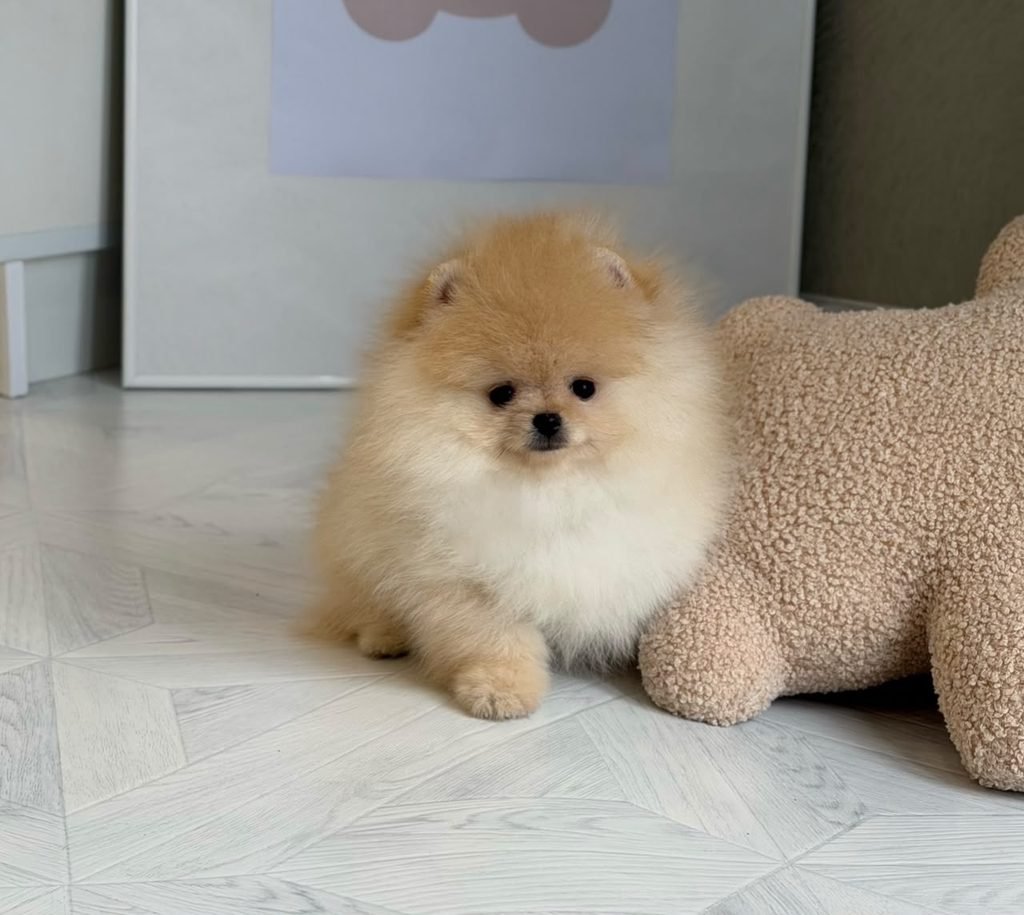
If you have children and are considering adding a small dog to your household, you may be asking, Are Pomeranians Good With Children? Pomeranians can be affectionate, playful, intelligent, and devoted companions, and many can develop wonderful relationships with children when they are properly socialized and treated gently.https://pomeranianblisspuppies.com/puppies/
However, there is an important consideration when bringing a Pomeranian into a home with kids: Pomeranians are very small dogs. Their size makes them more physically vulnerable to accidental injury, especially around toddlers and very young children.
This means that the answer to Are Pomeranians Good With Children? depends on the child’s age, the dog’s temperament, the family’s lifestyle, and how well everyone understands safe dog interactions.https://pomeranianblisspuppies.com/puppies/
With responsible adults, appropriate supervision, consistent training, and respectful children, a Pomeranian can become a loving member of the family.
Are Pomeranians Good With Children?
Yes, Pomeranians can be good with children, particularly when children are old enough to understand that a small dog needs gentle treatment.
Pomeranians are often lively and affectionate. They can enjoy playing, learning tricks, going on walks, and spending time with their favorite people.
The American Kennel Club describes the Pomeranian as a lively and affectionate companion and notes that the breed can be a good family dog. At the same time, the AKC generally considers Pomeranians more suitable for families with older children because of their small size.https://pomeranianblisspuppies.com/puppies/
Therefore, Are Pomeranians Good With Children? should not be answered simply with yes or no.
Instead, families should consider whether their children can safely interact with a tiny dog.
Why Pomeranians Can Be Good With Kids
There are several characteristics that can make Pomeranians appealing to families.
They Are Playful
Pomeranians often have energetic personalities despite their small bodies.
A properly exercised Pomeranian may enjoy playing with toys, practicing tricks, and participating in short interactive games.
Children who enjoy calm, appropriate games can have fun interacting with their dog.https://pomeranianblisspuppies.com/puppies/
They Can Be Affectionate
Many Pomeranians become strongly attached to their families.
They may enjoy sitting beside family members, following them around the house, or relaxing on a lap.
This affectionate personality can help create a close relationship between a child and a dog.
They Are Intelligent
Pomeranians are intelligent and can learn many commands and tricks.
Older children can participate in training under adult supervision.
Teaching a child how to reward good behavior can also help the child develop a better understanding of responsible pet ownership.
They Are Small
Their small size can be convenient for families living in apartments or smaller homes.
However, their small size is also the reason families must be especially careful with young children.
A Pomeranian’s size should never be treated as a reason to allow rough handling.
Are Pomeranians Good With Toddlers?
Families with toddlers should use extra caution.
Toddlers are still developing coordination and may not understand that dogs have boundaries. A toddler may unintentionally pull a dog’s fur, grab its tail, fall on it, or attempt to pick it up.
These actions can be dangerous for a tiny Pomeranian.
The question Are Pomeranians Good With Children? becomes more complicated when the children are very young.
A Pomeranian may be friendly toward a toddler, but the interaction still requires active adult supervision.
Never assume that a small dog is automatically safe simply because it is friendly.
Pomeranians and Older Children
Older children can often be a better match for Pomeranians.
A child who understands how to behave around dogs can learn to:
- Approach the dog calmly
- Pet gently
- Respect the dog’s personal space
- Leave the dog alone while eating
- Avoid disturbing the dog while sleeping
- Avoid rough play
- Ask permission before picking up the dog
- Understand when the dog wants to move away
- Participate in appropriate training activities
This can make the relationship much safer and more enjoyable.
Older children can also help with simple responsibilities, such as supervised play, brushing, or practicing basic commands.
Adults should remain responsible for the dog’s health and overall care.
Can Pomeranian Puppies Live With Children?
Pomeranian puppies can live successfully in families with children, but puppies require additional supervision.
A puppy is still learning about the world. It may bite during teething, jump, bark, have accidents in the house, or become frightened by unfamiliar situations.
Children need to understand that puppy behavior is normal and that training takes time.
Families should establish rules before the puppy arrives.
For example:
- The puppy’s crate is a quiet area.
- Children should not disturb the puppy while it sleeps.
- Food bowls should not be taken away.
- Toys should not be forcibly removed.
- Rough wrestling should not be allowed.
- Adults should supervise puppy handling.
- Children should never carry the puppy without appropriate supervision.
These simple rules can prevent many problems.
Are Pomeranians Patient With Children?
Individual Pomeranians have different personalities.
Some may be outgoing and tolerant, while others may prefer less handling or become uncomfortable when a child is too energetic.
It is therefore important not to assume that every Pomeranian will respond to children in exactly the same way.
A responsible breeder can provide information about a puppy’s individual temperament and early experiences.
Socialization can also help a puppy become comfortable with different people and environments.
However, socialization does not mean forcing a dog to tolerate unwanted handling.
Children should learn to respect the dog’s signals.
Understanding Pomeranian Body Language
One of the best ways to answer Are Pomeranians Good With Children? is to teach children how dogs communicate.
Dogs cannot use words to tell a child that they need space.
Instead, they may communicate through body language.
A Pomeranian may be uncomfortable if it:
- Moves away
- Hides
- Turns its head away
- Tucks its tail
- Becomes unusually still
- Avoids eye contact
- Licks its lips repeatedly
- Yawns when not tired
- Growls
Children should be taught that these signals mean they should stop interacting and give the dog space.
A growl should never be punished simply because an adult wants the dog to be quiet. A growl can provide useful information that the dog is uncomfortable.
Adults should calmly separate the child and dog and determine what caused the discomfort.
Teaching Children How to Pet a Pomeranian
Children should learn that petting should be gentle.
Instead of grabbing the dog, encourage children to allow the Pomeranian to approach them.
Show children how to gently stroke areas where the dog is comfortable being touched.
Avoid allowing children to:
- Pull the ears
- Pull the tail
- Grab the fur
- Touch the eyes
- Put fingers inside the mouth
- Ride on the dog
- Hug the dog tightly
- Chase the dog
- Corner the dog
These rules are particularly important with Pomeranians because of their small size.
Should Children Pick Up a Pomeranian?
Young children should not pick up a Pomeranian without adult supervision.
Even an older child should be taught the correct way to handle a small dog.
A dog can become frightened and jump out of someone’s arms. A fall from even a relatively low height can cause serious injury to a tiny dog.
If a child wants to hold the Pomeranian, an adult can supervise the interaction and demonstrate safe handling.
In many situations, it may be safer for the child to sit on the floor and allow the dog to sit beside them instead.
Are Pomeranians Good With Children Who Want a Playmate?
Pomeranians can enjoy playtime, but families need to choose appropriate games.
Good options may include:
- Gentle fetch
- Puzzle toys
- Finding hidden treats
- Trick training
- Supervised toy play
- Short training games
Avoid rough games such as wrestling or chasing the dog around the house.
A Pomeranian may interpret rough play as exciting, but it can also become overstimulated or accidentally injured.
The goal is to create positive interactions rather than constant physical excitement.
Training a Pomeranian Around Children
Training should begin as early as possible.
Important commands include:
- Sit
- Stay
- Come
- Leave it
- Drop it
- Wait
- Down
The command “leave it” can be particularly useful in a family environment.
For example, if a child drops a toy or food on the floor, teaching the dog to leave objects alone can prevent unwanted behavior.
Training also helps establish predictable routines.
Children can participate in simple training exercises when an adult is present.
Socializing a Pomeranian With Children
Socialization is important when raising a Pomeranian in a family environment.
A well-socialized puppy can gradually become comfortable around different people, sounds, environments, and experiences.
Children can be part of this process.
A puppy might experience:
- Calm children
- Different adults
- Household sounds
- Visitors
- Car rides
- Grooming
- Gentle handling
- New rooms
- Different surfaces
- Appropriate dogs
These experiences should be introduced gradually.
The puppy should not be forced into situations that create overwhelming fear or stress.
Positive experiences are more useful than simply exposing a puppy to as many things as possible.
Are Pomeranians Good With Children in Busy Homes?
Pomeranians can live in active households, but they still need quiet time.
A busy family home can contain lots of movement, voices, toys, doors opening, and children playing.
A Pomeranian should have somewhere peaceful to rest.
Consider creating a designated dog area using:
- A crate
- A comfortable bed
- A playpen
- A gated room
- A quiet corner
Teach children that when the Pomeranian is in its designated resting area, they should leave it alone.
This gives the dog an opportunity to relax without being constantly approached.
Feeding a Pomeranian Around Children
Children should also learn appropriate rules around feeding.
Never allow a child to take food away from a dog while the dog is eating.
Instead, teach children to wait until the dog has finished.
Adults should also supervise children around treats.
Pomeranians have small bodies and should receive appropriately sized portions.
A family feeding routine can help prevent accidental overfeeding.
What About Toys?
Pomeranians can enjoy toys, but families should select toys appropriate for a small breed.
Check toys regularly for damage.
If a toy begins to break apart, remove it.
Children should also understand that taking a toy away from a dog can create conflict.
If the dog has something it should not have, an adult should handle the situation using appropriate training rather than encouraging children to grab the object.
Are Pomeranians Good With Children and Other Pets?
Some Pomeranians can live happily with children and other pets.
However, introductions should be gradual.
A large dog can accidentally injure a Pomeranian during rough play, even if the larger dog is friendly.
Children should not be allowed to encourage dogs to chase or wrestle with the Pomeranian.
Supervised interaction is especially important during the early stages of introducing pets.
How Much Exercise Does a Pomeranian Need?
Pomeranians are energetic for their size.
They benefit from regular exercise and mental stimulation.
Families can provide activity through:
- Short walks
- Indoor play
- Training
- Interactive toys
- Puzzle feeders
- Gentle games
Children can participate in supervised play, but adults should make sure the activity remains appropriate.
Because Pomeranians are small, they do not need to participate in strenuous activities designed for much larger dogs.
Are Pomeranians Good With Children Who Want to Help With Grooming?
Children may enjoy helping with grooming, but adults should supervise.
Pomeranians have a thick coat that benefits from regular brushing.
Older children may be able to help gently brush the dog after being shown the correct technique.
However, grooming around sensitive areas should generally be handled by an adult or experienced groomer.
Children should never pull through mats or use grooming tools without supervision.
Making grooming a calm and positive experience can help the Pomeranian become comfortable with regular care.
Teaching Children to Respect a Pomeranian’s Boundaries
One of the most important lessons for any family is that dogs deserve personal space.
Children should understand that a Pomeranian is a living animal rather than a toy.
The dog should be allowed to:
- Sleep without interruption
- Eat without interference
- Move away from interactions
- Rest in its own space
- Enjoy quiet time
- Have toys without being constantly challenged
Teaching boundaries benefits both the child and the dog.
Are Pomeranians Good With Children Who Have Never Owned a Dog?
A family without previous dog experience can still successfully raise a Pomeranian.
However, parents should take the lead in learning about canine behavior and teaching children appropriate interaction.
Before bringing the puppy home, discuss basic rules with the entire family.
Explain what the puppy needs and what children should never do.
Having these conversations before the puppy arrives can make the transition easier.
Common Mistakes Families Make With Pomeranians
Even families with good intentions can make mistakes.
Common problems include:
Treating the Pomeranian Like a Toy
Because Pomeranians are tiny and fluffy, children may want to carry them around constantly.
This can make the dog uncomfortable and can create an injury risk.
Allowing Rough Play
Rough games may encourage unwanted behaviors and can accidentally injure a small dog.
Ignoring Warning Signals
A dog that repeatedly moves away is communicating something important.
Give the dog space rather than forcing interaction.
Leaving Young Children and Dogs Alone
Even a friendly Pomeranian and a gentle child should not be left unsupervised together.
Inconsistent Rules
If one family member allows behavior that another family member prohibits, the dog may struggle to understand expectations.
How Parents Can Make the Relationship Safer
Parents play the most important role in creating a successful relationship between children and a Pomeranian.
Parents should:
- Supervise young children around the dog.
- Teach children gentle handling.
- Provide the dog with a private resting area.
- Teach basic obedience.
- Socialize the puppy appropriately.
- Watch for signs of discomfort.
- Keep food and toys managed appropriately.
- Prevent rough play.
- Teach children never to disturb the dog while eating or sleeping.
- Make sure adults remain responsible for the dog’s overall care.
These practices can help create a respectful relationship.
Choosing a Pomeranian Puppy for a Family With Children
If you are purchasing a puppy, tell the breeder that you have children.
A responsible breeder should want to understand your household and help determine whether a particular puppy is an appropriate match.
Ask about:
- The puppy’s temperament
- Early socialization
- Veterinary examination
- Vaccinations
- Health records
- Parents’ health testing
- Feeding routine
- Previous experiences with children
- Contract terms
- Health guarantee terms
Do not choose a puppy simply because it is the smallest, fluffiest, or most visually appealing.
Temperament and health should be important considerations.
Are Pomeranians Good With Children? Questions to Ask Yourself
Before bringing home a Pomeranian, consider these questions:
Are my children old enough to understand gentle handling?
Can an adult supervise interactions?
Will the dog have a quiet place to rest?
Can we commit to regular grooming?
Can we provide daily training and socialization?
Will the adults remain responsible for veterinary care?
Can we prevent rough play?
Can our children respect the dog’s boundaries?
If the answer to these questions is yes, your household may be well prepared for a Pomeranian.
Frequently Asked Questions
Are Pomeranians good with children?
Yes, many Pomeranians can live happily with children when they are properly socialized and children are taught to interact gently. Their small size means supervision is particularly important.
Are Pomeranians good with toddlers?
Pomeranians can live in homes with toddlers, but extra caution is necessary. Toddlers may accidentally hurt a very small dog, so close adult supervision is essential.
Are Pomeranians good with older children?
Older children can be a good match because they are generally better able to understand a Pomeranian’s small size and need for gentle handling.
Can children train a Pomeranian?
Older children can participate in simple training exercises under adult supervision. Training can be an excellent way for children to develop a positive relationship with their dog.
Can a Pomeranian be a child’s first dog?
A Pomeranian can become a child’s companion, but adults should remain responsible for the dog’s care. Children should not be expected to independently handle feeding, training, veterinary care, or other major responsibilities.
Do Pomeranians like to play with children?
Many Pomeranians enjoy appropriate play with children. Games should be gentle and supervised, especially because of the breed’s small size.
Should children carry Pomeranians?
Young children should not carry Pomeranians without adult supervision. Falls can seriously injure a small dog.
Can Pomeranians become aggressive with children?
Any dog can react defensively if frightened, hurt, cornered, or handled inappropriately. Teaching children to respect boundaries and supervising interactions can help reduce risks.
Do Pomeranians bark around children?
Some Pomeranians can be vocal when excited, alert, or uncomfortable. Training and socialization can help families manage excessive barking.
Are Pomeranians easy family dogs?
Pomeranians can be rewarding family companions, but they still require grooming, training, socialization, veterinary care, exercise, and careful handling.
Final Thoughts: Are Pomeranians Good With Children?
So, Are Pomeranians Good With Children? They can be, provided the family understands the breed and creates a safe environment.
Pomeranians are affectionate, intelligent, playful, and full of personality. These qualities can make them enjoyable companions for families with children.
The biggest consideration is their small and delicate size. Families with toddlers and very young children need to provide particularly close supervision. Children should be taught from the beginning that a Pomeranian is not a toy and should never be chased, squeezed, pulled, or disturbed while eating or sleeping.
Older children who understand gentle handling may be able to develop a particularly rewarding relationship with a Pomeranian. They can participate in training, grooming, supervised play, and other age-appropriate activities.
Ultimately, Are Pomeranians Good With Children? depends on the individual dog and the family. With responsible adults, appropriate supervision, early socialization, positive training, and respectful children, a Pomeranian can become a cherished part of family life.https://pomeranianblisspuppies.com/puppies/