October 5, 2026
What to Expect When Bringing Home a Pomeranian Puppy – First Days at Home
What to Expect When Bringing Home a Pomeranian Puppy
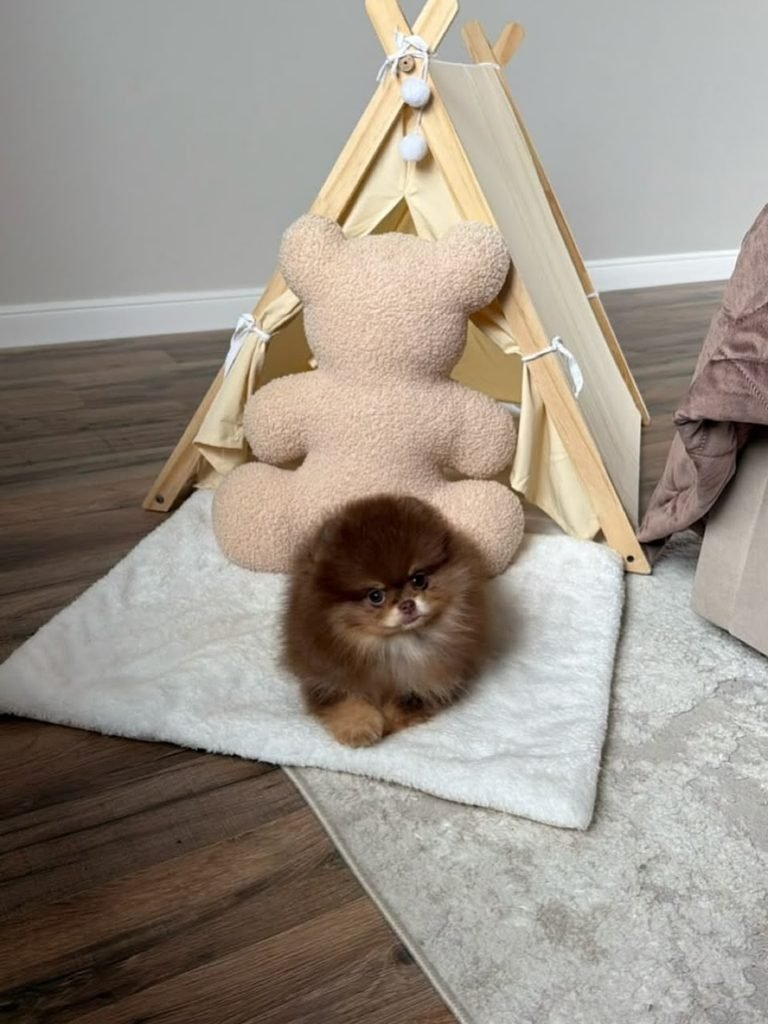
Bringing home a new puppy is exciting, but it can also feel overwhelming during the first few days. If you are wondering what to expect when bringing home a Pomeranian puppy, preparing ahead of time can make the transition much easier for both you and your new companion.https://pomeranianblisspuppies.com/
A Pomeranian puppy is entering a completely new environment when it leaves its breeder. New smells, people, sounds, routines, sleeping arrangements, food, and surroundings can all feel unfamiliar. Even a confident puppy may need several days or weeks to fully settle into the new home.
Understanding what to expect when bringing home a Pomeranian puppy helps you create a calm environment and establish good habits from the beginning.https://pomeranianblisspuppies.com/
The first days should focus on safety, rest, routine, bonding, appropriate feeding, potty training, gentle socialization, and getting your puppy established with a veterinarian.
What to Expect When Bringing Home a Pomeranian Puppy
When you first bring your Pomeranian puppy home, do not expect everything to be perfect immediately.
Your puppy may:
- Sleep frequently
- Cry at night
- Follow you around
- Hide or act shy
- Explore every room
- Have potty accidents
- Eat differently than expected
- Miss its mother and littermates
- Become excited by new sounds
- Need frequent bathroom breaks
- Seek constant attention
- Take time to become comfortable
These behaviors can be normal during the adjustment period.
Your goal during the first few days is not to teach your puppy everything at once. Instead, focus on helping your puppy feel safe and establishing predictable routines.https://pomeranianblisspuppies.com/
Preparing Your Home Before the Pomeranian Arrives
One of the best things you can do is prepare your home before bringing your puppy through the door.
Create a dedicated puppy area where your Pomeranian can rest and feel secure.
You may need:
- A comfortable puppy bed
- An appropriately sized crate
- Food and water bowls
- Puppy food
- Safe chew toys
- Interactive toys
- Collar and identification tag
- Puppy leash
- Grooming brush
- Puppy-safe cleaning supplies
- Training treats
- Baby gates
- Puppy pads if you plan to use them
- Comfortable blankets
Remove or secure anything your puppy could chew, swallow, knock over, or otherwise get into.
Small dogs can reach surprisingly small spaces, so look at your home from a puppy’s perspective.https://pomeranianblisspuppies.com/
Puppy-Proofing Your Home
Pomeranian puppies are curious and energetic.
Before arrival, inspect areas such as:
- Electrical cords
- Small objects
- Cleaning products
- Medications
- Trash cans
- Houseplants
- Open doors
- Stairways
- Gaps behind furniture
- Low shelves
- Children’s toys
Keep anything potentially dangerous out of your puppy’s reach.
Do not assume that a puppy will automatically know what is safe to chew.
Instead, provide appropriate toys and redirect your puppy whenever necessary.https://pomeranianblisspuppies.com/
The First Day With Your Pomeranian Puppy
The first day should be relatively calm.
Your puppy has just experienced a major change. Even if the puppy appears excited, avoid immediately introducing it to a large number of people.
Start by showing your puppy the area where it will eat, sleep, play, and go potty.
Give your puppy time to explore.
You can introduce the puppy to the rest of the home gradually rather than allowing unlimited access immediately.
This can make supervision and potty training easier.
Should You Invite Visitors on the First Day?
It is usually better to keep the first day quiet.
Your puppy will have plenty of time to meet friends and relatives later.
Too many visitors can create unnecessary excitement and make it harder for a puppy to rest.
Instead, allow your puppy to become comfortable with the people who live in the home first.
Once your puppy is settled, you can gradually introduce new people in positive and appropriate ways.
Your Pomeranian Puppy May Cry at Night
One of the biggest surprises for new owners is nighttime crying.
Your puppy has previously slept near its mother and littermates. Suddenly sleeping alone in a new house can feel strange.
Your puppy may whine, bark, or cry during the first few nights.
This does not necessarily mean something is wrong.
Before bedtime, make sure your puppy:
- Has had an appropriate potty break
- Has access to a safe sleeping area
- Is comfortable
- Has had appropriate daytime activity
- Has access to water according to your veterinarian’s guidance
- Is not showing signs of illness
A consistent bedtime routine can help your puppy learn that nighttime is for sleeping.
Where Should a Pomeranian Puppy Sleep?
Choose a safe sleeping location before your puppy arrives.
A crate or puppy-safe sleeping area can provide structure and security.
The sleeping area should be:
- Comfortable
- Secure
- Free from hazards
- Appropriately sized
- Easy for you to monitor
- Away from extreme temperatures
- Part of a consistent nighttime routine
Many owners prefer keeping the puppy’s crate nearby during the first nights because it allows them to respond if the puppy needs a bathroom break.
How Much Will a Pomeranian Puppy Sleep?
Young puppies sleep a lot.
Do not worry if your new Pomeranian spends significant portions of the day sleeping.
Growth and development require plenty of rest.
Your puppy may alternate between:
Sleep → wake up → potty → eat → play → potty → sleep.
This cycle may repeat many times throughout the day.
Do not deliberately keep your puppy awake for long periods simply because you want to play.
An overtired puppy can become cranky, mouthy, restless, or difficult to settle.
Feeding Your New Pomeranian Puppy
One of the first questions to ask the breeder is what your puppy has been eating.
Keeping the diet consistent during the initial transition can help avoid unnecessary digestive upset.
Ask for:
- Food brand
- Food type
- Feeding schedule
- Approximate portion size
- Treat recommendations
- Feeding instructions
If you plan to change foods, speak with your veterinarian about an appropriate transition.
Because Pomeranians are small dogs, feeding should be handled carefully and according to the puppy’s age, size, health, and veterinary recommendations.
Your Pomeranian Puppy May Eat Less on the First Day
Some puppies may have a reduced appetite immediately after arriving in a new home.
Stress, excitement, travel, and environmental changes can affect eating behavior.
However, a puppy that refuses food completely or shows other concerning symptoms should not simply be ignored.
Contact your veterinarian if you are worried, especially if your puppy is also unusually weak, lethargic, vomiting, having significant diarrhea, or displaying other signs of illness.
Potty Training Starts Immediately
You do not need to wait several days before beginning potty training.
Start establishing a bathroom routine from the first day.
Take your puppy to the designated potty area:
- After waking
- After eating
- After drinking
- After playing
- Before bedtime
- Whenever your puppy shows signs of needing to go
Praise your puppy calmly when it uses the correct location.
Accidents are expected with young puppies.
Do not punish your Pomeranian for an accident. Instead, clean the area thoroughly and focus on improving supervision and scheduling.
How Often Does a Pomeranian Puppy Need Potty Breaks?
Young puppies generally need frequent opportunities to eliminate.
The exact schedule varies with age, feeding, water intake, activity, and individual development.
A very young puppy may need substantially more frequent bathroom breaks than an adult dog.
Watch for signs such as:
- Sniffing the floor
- Circling
- Restlessness
- Walking toward a previous potty area
- Suddenly stopping play
- Whining or pacing
The faster you learn your puppy’s signals, the easier potty training becomes.
Starting a Pomeranian Puppy Routine
A predictable routine can make the transition easier.
A basic routine may look like:
Morning: Wake up → potty → breakfast → potty → gentle play
Midday: Potty → play or training → meal if appropriate → rest
Afternoon: Potty → short training → play → nap
Evening: Dinner if appropriate → potty → calm interaction → grooming → potty
Bedtime: Final potty break → quiet time → sleep
Your puppy’s exact schedule should be adjusted according to age, feeding needs, veterinary advice, and your household.
Introducing Your Pomeranian Puppy to the Family
Everyone in the home should understand that the puppy needs time to adjust.
Teach children to:
- Sit calmly around the puppy
- Avoid chasing the puppy
- Avoid pulling the tail or ears
- Avoid disturbing the puppy while eating
- Avoid waking the puppy unnecessarily
- Use gentle hands
- Allow the puppy to retreat to its safe area
Young children should always be supervised around a small puppy.
Bonding With Your New Pomeranian Puppy
Bonding does not happen all at once.
Your relationship develops through repeated positive experiences.
You can build trust by:
- Feeding your puppy
- Playing appropriately
- Practicing short training sessions
- Providing gentle grooming
- Sitting quietly together
- Speaking calmly
- Maintaining predictable routines
- Rewarding good behavior
- Protecting your puppy from frightening experiences
Your Pomeranian will gradually learn that you provide safety, food, comfort, guidance, and fun.
Your Puppy May Follow You Everywhere
Many Pomeranian puppies become very attached to their owners.
Your puppy may follow you from room to room.
This can be adorable, but it is also important to teach healthy independence.
Provide short periods where your puppy can relax safely without being directly beside you.
Gradually teaching alone-time skills can help reduce the risk of developing excessive dependence.
Starting Crate Training
A crate can become a safe resting place for your Pomeranian puppy.
Never use the crate as punishment.
Instead:
- Make the crate comfortable.
- Place treats or toys inside.
- Let the puppy investigate voluntarily.
- Feed appropriate meals near or inside the crate.
- Begin with very short periods.
- Gradually increase the time.
- Keep the experience positive.
The goal is for your puppy to view the crate as a comfortable place to relax.
Your Pomeranian Puppy Will Need Gentle Training
Training can begin from the first day.
Start with simple behaviors such as:
- Responding to its name
- Coming toward you
- Sitting
- Following a treat
- Accepting gentle handling
- Walking calmly indoors
- Settling in its bed
- Beginning crate training
Keep sessions short.
Young puppies have limited attention spans.
Several brief sessions are generally more practical than one long training session.
Socialization After Bringing Your Pomeranian Home
Socialization is an important part of puppy development.
The goal is to help your Pomeranian become comfortable with appropriate people, sounds, surfaces, environments, handling, and experiences.
Introduce new experiences gradually and positively.
Examples may include:
- Different household sounds
- Gentle grooming
- Car rides
- New surfaces
- Calm visitors
- Household appliances
- Wearing a collar
- Walking on a leash
- Being handled gently
Follow your veterinarian’s advice regarding safe public exposure before your puppy has completed its recommended vaccinations.
Your Pomeranian Puppy May Be Nervous at First
Some puppies are immediately confident.
Others are more cautious.
A puppy may initially:
- Hide
- Stay close to you
- Avoid certain rooms
- Startle at sounds
- Cry
- Hesitate to explore
Do not force your puppy into frightening situations.
Give your puppy time.
Use calm encouragement and positive reinforcement to build confidence gradually.
Meeting Other Dogs
If you already have another dog, introduce the animals carefully.
Avoid simply placing them together and assuming they will become friends immediately.
Consider:
- The resident dog’s temperament
- The puppy’s confidence
- Safe introduction areas
- Supervision
- Resource guarding
- Food and toy management
- Separate sleeping spaces
Never leave a very small Pomeranian puppy unsupervised with another dog until you are confident the interaction is safe.
Introducing a Pomeranian Puppy to a Cat
If you have a cat, introductions should also be gradual.
Give the cat a safe area where the puppy cannot reach it.
Allow the animals to become familiar with each other’s scent before expecting them to interact closely.
Supervise early interactions and reward calm behavior.
Grooming Your Pomeranian Puppy
Pomeranians have a fluffy double coat that requires regular care.
Do not wait until your puppy is older to introduce grooming.
Start gently with:
- Brushing
- Touching the paws
- Looking at the ears
- Handling the tail
- Checking the coat
- Brief tooth-brushing practice
Keep early grooming sessions short and positive.
The goal is to teach your puppy that grooming is a normal part of life.
Dental Care Should Start Early
Small dogs can be prone to dental problems, so dental care should become part of your puppy’s routine.
Ask your veterinarian about:
- Puppy tooth brushing
- Appropriate dental products
- Dental examinations
- Safe chews
- When professional dental care may become necessary
Introducing tooth brushing gradually can make future dental care easier.
Your Pomeranian Puppy Will Need a Veterinary Visit
One of the most important steps after bringing home a puppy is establishing veterinary care.
Take your puppy’s records with you.
Your veterinarian can review:
- Vaccination history
- Deworming
- Parasite prevention
- Weight
- General health
- Diet
- Development
- Future vaccination needs
- Preventive care
Ask your veterinarian what signs would require immediate attention.
What to Bring to the First Vet Visit
Bring:
- Puppy health records
- Vaccination information
- Deworming information
- Current food information
- Breeder contact information if appropriate
- Questions you have about care
- Any medication or supplement information
You can also ask the veterinarian to help you create a preventive-care schedule.
Traveling Home With Your Pomeranian Puppy
The trip home can be stressful.
Use a secure carrier or appropriately restrained travel setup.
Do not allow your puppy to roam freely inside a moving vehicle.
Bring:
- A secure carrier
- A small blanket
- Paper towels
- Puppy-safe cleaning supplies
- Water as appropriate
- Food if the journey is long
- Health records
- Contact information for the breeder and veterinarian
If you are traveling a long distance, plan appropriate breaks and follow veterinary guidance.
What to Expect During the First Week
The first week is primarily about adjustment.
Your puppy is learning:
- Where to sleep
- Where to eat
- Where to potty
- Who its family is
- What sounds are normal
- Which behaviors earn rewards
- Where it is allowed to play
- How the household routine works
Do not expect perfect behavior.
Your puppy is learning everything from the beginning.
Consistency is more important than perfection.
Common First-Week Mistakes
New puppy owners sometimes make the transition harder by:
Giving Too Much Freedom
A puppy with access to the entire house may have more accidents and opportunities to get into trouble.
Changing Food Immediately
A sudden diet change can cause digestive problems.
Overwhelming the Puppy
Too many visitors and new experiences can be stressful.
Skipping a Routine
Inconsistent feeding, potty, sleep, and training schedules can make adjustment harder.
Expecting Immediate Potty Training
Young puppies need time and frequent opportunities.
Punishing Accidents
Punishment can create fear rather than teach the desired behavior.
Ignoring Rest
Puppies need substantial sleep.
Overhandling
Small puppies should be handled gently and given opportunities to rest undisturbed.
What to Expect From Your Pomeranian’s Personality
Your puppy’s personality will become clearer over time.
You may notice that your Pomeranian is:
- Playful
- Affectionate
- Curious
- Confident
- Independent
- Alert
- Vocal
- Cautious
- Energetic
- People-oriented
Remember that puppy behavior can change as your dog develops.
Avoid labeling your puppy permanently based on a single behavior during the first few days.
How to Help Your Pomeranian Feel Safe
A new puppy needs consistency.
You can help your Pomeranian feel secure by keeping:
- Meals predictable
- Bedtime consistent
- Training positive
- Rules clear
- Handling gentle
- Environment calm
- Rest periods protected
When everyone in the household follows the same rules, the puppy has an easier time understanding expectations.
How to Make the First Week Easier
A successful first week does not require complicated training.
Focus on five priorities:
1. Safety
Keep the puppy away from hazards.
2. Routine
Keep meals, potty breaks, naps, and bedtime predictable.
3. Health
Follow veterinary recommendations.
4. Bonding
Build trust through positive interactions.
5. Training
Start simple and reward good behavior.
These basics create a strong foundation.
Pomeranian Puppy First-Week Checklist
Use this checklist after bringing your puppy home:
- Puppy-safe area prepared
- Crate prepared
- Puppy food purchased
- Water bowl available
- Appropriate toys available
- Collar and identification ready
- Leash ready
- Grooming supplies available
- Potty area established
- Sleeping area prepared
- Veterinary appointment arranged
- Vaccination records collected
- Feeding instructions obtained
- Household rules established
- Children taught safe puppy handling
- Other pets introduced carefully
- Daily routine established
Frequently Asked Questions
What should I expect when bringing home a Pomeranian puppy?
Expect an adjustment period. Your puppy may sleep frequently, cry at night, have accidents, follow you around, explore constantly, or appear shy. A predictable routine can make the transition easier.
How long does it take a Pomeranian puppy to adjust to a new home?
Every puppy is different. Some become comfortable quickly, while others need more time. Keeping the environment calm and predictable can help your puppy adjust.
Should I leave my Pomeranian puppy alone on the first day?
Young puppies should not be expected to spend long periods alone immediately after arriving. Begin with short, positive periods of separation and gradually teach independence.
Should my Pomeranian puppy sleep in a crate?
A properly introduced crate can be a useful and safe sleeping area. Make it comfortable and positive rather than using it as punishment.
What should I feed my new Pomeranian puppy?
Start by asking the breeder what the puppy has been eating. Discuss the puppy’s diet and feeding schedule with your veterinarian, particularly because Pomeranians are very small dogs.
When should my Pomeranian puppy see a veterinarian?
Arrange veterinary care soon after bringing your puppy home and take the puppy’s health records with you. Your veterinarian can establish an appropriate preventive-care schedule.
How soon should I start training my Pomeranian puppy?
Basic training can begin immediately with short, positive sessions. Start with simple behaviors such as name recognition, coming when called, gentle handling, crate training, and potty routines.
When should I start grooming my Pomeranian puppy?
Introduce grooming gradually from an early age. Short, positive sessions can help your Pomeranian become comfortable with brushing, paw handling, ear checks, and other routine care.
What if my Pomeranian puppy cries at night?
Your puppy may cry because the new environment feels unfamiliar or because it needs a potty break. Check the puppy calmly, maintain a consistent bedtime routine, and avoid turning nighttime into an extended play session.
How can I bond with my new Pomeranian puppy?
Spend time feeding, playing, training, grooming, and calmly interacting with your puppy. Consistent positive experiences help build trust and a strong relationship.
Final Thoughts on What to Expect When Bringing Home a Pomeranian Puppy
Knowing what to expect when bringing home a Pomeranian puppy can make those first days much less stressful.
Your puppy is entering a completely new environment, so patience is essential. Do not expect perfect potty training, quiet nights, flawless obedience, or immediate confidence.
Instead, focus on creating a safe home, establishing a consistent routine, providing appropriate nutrition, scheduling veterinary care, beginning gentle training, and building trust.
The first few days are about adjustment. The first few weeks are about creating habits. Over time, your Pomeranian will become more comfortable with your home, family, routines, and expectations.
With patience, consistency, positive reinforcement, and responsible care, bringing home a Pomeranian puppy can be the beginning of a wonderful lifelong relationship.https://pomeranianblisspuppies.com/