October 4, 2026
How Old Should a Pomeranian Puppy Be When You Buy One? – Buyer’s Guide
How Old Should a Pomeranian Puppy Be When You Buy One?
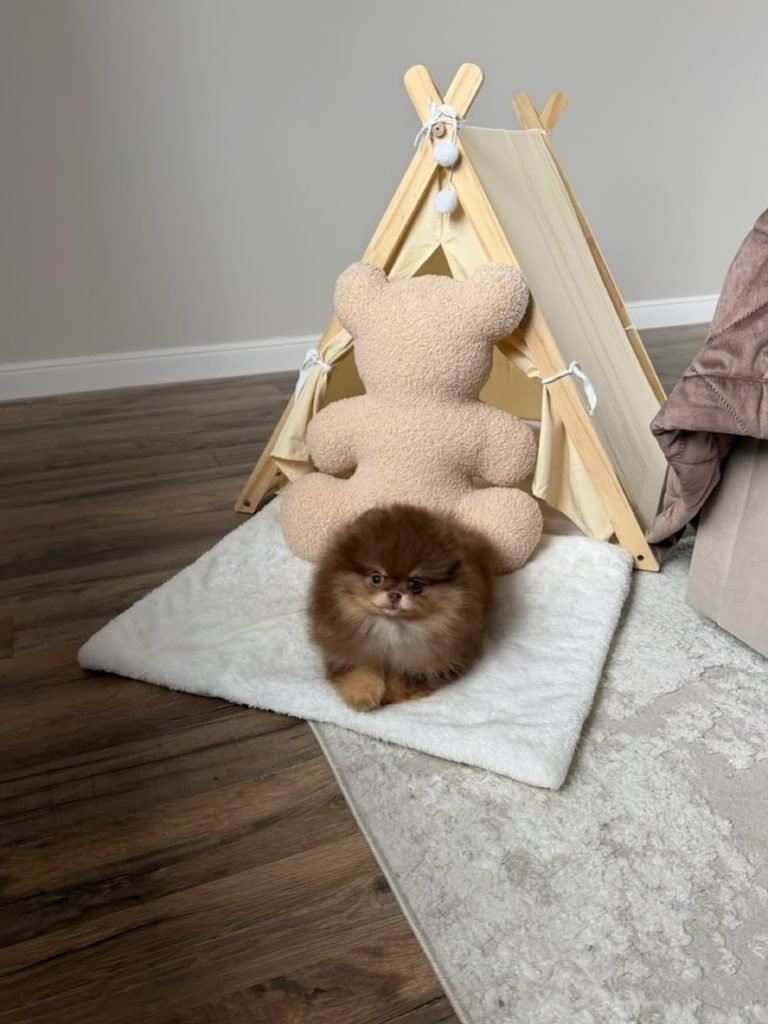
If you are planning to bring home a Pomeranian puppy, one of the most important questions to ask is: How Old Should a Pomeranian Puppy Be When You Buy One? Choosing the right age can make a major difference in your puppy’s health, social development, training, and adjustment to a new home.https://pomeranianblisspuppies.com/care-guide/
In most situations, a Pomeranian puppy should not leave its mother and littermates too early. A responsible breeder will allow the puppy enough time to develop important physical, behavioral, and social skills before going to a new family.
For many families, around 8 to 12 weeks of age is an appropriate general window for bringing home a Pomeranian puppy, depending on the individual puppy, breeder practices, health status, development, and veterinary guidance. Some breeders may keep small or developing puppies longer before placement.
Understanding how old a Pomeranian puppy should be when you buy one can help you avoid rushing the process and give your new puppy a healthier start.https://pomeranianblisspuppies.com/care-guide/
How Old Should a Pomeranian Puppy Be When You Buy One?
So, how old should a Pomeranian puppy be when you buy one?
A good general guideline is to look for a puppy that is at least 8 weeks old and has been properly weaned, appropriately socialized, and evaluated for health.
However, age should not be the only factor you consider. A responsible breeder should also consider:
- The puppy’s physical development
- Weaning progress
- Weight and overall condition
- Ability to eat independently
- Social development
- Veterinary examination
- Vaccination and deworming history
- Temperament
- Readiness for transition
- The puppy’s individual needs
Some Pomeranian puppies may benefit from staying with their breeder longer, particularly if they are very small, immature, or need additional time to develop.
The right question is therefore not simply, “How young can I buy a puppy?” Instead, ask whether the puppy is developmentally and medically ready to leave its breeder.
Why 8 Weeks Is an Important Milestone
Eight weeks is commonly recognized as an important transition point for puppies.
By this age, puppies have typically experienced significant development since birth. They have spent valuable time with their mother and littermates learning how to interact, play, communicate, and respond to their environment.
For a Pomeranian puppy, this early period can be particularly important because the breed is very small and puppies require careful handling and appropriate care.
A puppy that is at least 8 weeks old may be ready to begin the transition to a new household if the breeder and veterinarian determine that the puppy is healthy and sufficiently developed.
However, reaching 8 weeks does not automatically mean every puppy should leave immediately.
Should You Buy a Pomeranian Puppy at 6 Weeks?
Generally, you should be cautious about purchasing a Pomeranian puppy that is only 6 weeks old and being offered for immediate placement.
At 6 weeks, puppies are still developing important social and behavioral skills. They are also continuing the transition away from their mother’s milk and learning appropriate interactions with littermates.
A seller who is eager to send a very young puppy home should be questioned carefully.
Ask:
- Why is the puppy leaving so early?
- Has the puppy been completely weaned?
- Has a veterinarian examined the puppy?
- What does the puppy currently eat?
- Has the puppy received appropriate parasite prevention?
- What socialization has occurred?
- Why does the breeder believe the puppy is ready?
If the answers are unclear, consider looking for another breeder.
What About Buying a Pomeranian Puppy at 7 Weeks?
Seven weeks is closer to the normal transition period, but it can still be early for some puppies.
Rather than focusing only on the number of weeks, consider the puppy’s overall development.
A responsible breeder should be able to explain why the puppy is ready for a new home and provide appropriate health information.
If a breeder routinely sends puppies home as soon as possible rather than prioritizing their development, that may be a reason to ask additional questions.
Is 8 Weeks a Good Age for a Pomeranian Puppy?
For many puppies, 8 weeks can be an appropriate minimum age to begin going to a new home.
At this point, a healthy and appropriately developed puppy may be:
- Eating puppy food independently
- Drinking water
- Playing normally
- Interacting with people
- Learning from littermates
- Beginning basic household exposure
- Developing individual personality traits
- Ready to start bonding with a new family
However, Pomeranians can be exceptionally small, and individual development matters.
A responsible breeder may decide that a particular puppy should remain with them beyond 8 weeks.
That is not necessarily a negative thing. In fact, it can demonstrate that the breeder is making decisions based on the puppy rather than simply trying to complete a sale.
Is 10 Weeks a Good Age to Buy a Pomeranian Puppy?
Yes. Ten weeks can be an excellent age for some Pomeranian puppies to transition to their new families.
By 10 weeks, a puppy has had additional time for social development and exposure to everyday experiences.
A breeder may use this additional time to introduce puppies to:
- Different household sounds
- Gentle handling
- Grooming
- Crate routines
- Short periods away from littermates
- Different surfaces
- New people
- Basic training
- Household routines
These experiences can help prepare the puppy for life with its new family.
If you are considering a particularly tiny Pomeranian, it can be worthwhile asking the breeder whether the puppy would benefit from staying longer.
Is 12 Weeks Too Old to Buy a Pomeranian Puppy?
No. A 12-week-old Pomeranian puppy is not automatically too old.
In some situations, a breeder may keep a puppy until 10, 11, or 12 weeks or longer.
There can be good reasons for this.
For example, a breeder may want additional time to monitor a puppy’s development, complete certain health care, provide additional socialization, or ensure that a very small puppy is ready for the transition.
A 12-week-old puppy can still bond strongly with a new family and learn new routines.
The important question is whether the puppy has received good care and appropriate socialization during those additional weeks.
Why Should Pomeranian Puppies Stay With Their Mother?
Puppies learn important lessons during their early weeks with their mother and littermates.
Their mother provides more than nourishment. Puppies also observe and interact with her.
Littermates provide opportunities to learn appropriate play and communication.
During this period, puppies can begin learning:
- Bite inhibition
- Appropriate play behavior
- Social signals
- Confidence
- Boundaries
- Communication
- Tolerance
- Appropriate interactions with other dogs
Removing a puppy too early can interfere with some of these developmental experiences.
This is one reason responsible breeders do not focus simply on selling puppies as young as possible.
Why Littermates Matter
Littermates provide a puppy with a unique learning environment.
When puppies play together, they naturally learn that biting too hard can cause another puppy to stop playing. They also learn how to respond to body language and vocal signals.
These experiences can contribute to appropriate social behavior.
For a Pomeranian puppy, this early social learning is valuable because the puppy will eventually need to interact with humans, other dogs, and different environments.
Pomeranian Puppy Socialization Before Going Home
Another reason age matters is socialization.
Responsible breeders can introduce puppies to safe, age-appropriate experiences before they leave for their permanent homes.
Early experiences may include:
- Gentle human handling
- Household sounds
- Different surfaces
- Grooming
- Short separations
- Appropriate play
- Safe environmental changes
- Basic crate exposure
- Car rides when appropriate
Good early socialization does not mean overwhelming a puppy with everything at once.
The goal is to provide positive experiences that gradually build confidence.
Health Checks Before Buying a Pomeranian Puppy
Age is only one part of choosing a puppy.
Before buying a Pomeranian puppy, ask whether the puppy has received a veterinary examination.
A responsible breeder should be willing to discuss:
- General health
- Vaccination history
- Deworming
- Parasite prevention
- Veterinary examinations
- Parent health testing
- Health records
- Any known health concerns
The American Kennel Club recommends appropriate health testing for breeding dogs, and breed-specific recommendations can help buyers understand what responsible breeders should consider.
Do not be afraid to ask for documentation rather than relying only on verbal assurances.
Should a Pomeranian Puppy Have Vaccinations Before Going Home?
Puppy vaccination schedules vary depending on age, veterinary recommendations, location, and individual circumstances.
Your breeder should provide you with a clear record of the puppy’s veterinary care and any vaccinations or treatments already received.
Once the puppy comes home, establish a relationship with your veterinarian and ask when the next vaccinations, parasite prevention, examinations, and other preventive care are due.
Do not assume that one vaccination means a puppy is fully protected against every infectious disease.
What Health Records Should You Receive?
When you buy a Pomeranian puppy, ask for appropriate records.
Depending on the breeder and puppy’s age, these may include:
- Vaccination records
- Deworming records
- Veterinary examination information
- Microchip information, if applicable
- Health testing information for the parents
- Registration documentation, if applicable
- Feeding instructions
- Medication or treatment information
- Written health guarantee or contract
Keep these documents in a safe place.
You can also give copies or relevant information to your veterinarian during the puppy’s first appointment.
How to Tell If a Pomeranian Puppy Is Ready to Go Home
A puppy’s age should be combined with an assessment of readiness.
Before taking your Pomeranian puppy home, look for signs that the puppy is developing appropriately.
The puppy should generally be:
- Alert
- Active for its age
- Eating independently
- Drinking normally
- Comfortable interacting with people
- Able to move normally
- Free from obvious signs of illness
- Appropriately socialized
- Receiving suitable veterinary care
If you notice persistent coughing, severe lethargy, significant discharge, vomiting, diarrhea, breathing problems, or other concerning symptoms, ask the breeder for veterinary evaluation before taking the puppy home.
Questions to Ask a Pomeranian Breeder
Before purchasing a puppy, ask the breeder several questions.
Ask About the Puppy
- How old is the puppy?
- When was the puppy weaned?
- What food is the puppy eating?
- Has the puppy seen a veterinarian?
- What vaccinations has the puppy received?
- What parasite prevention has been provided?
- What is the puppy’s current weight?
- What is the puppy’s daily routine?
- How has the puppy been socialized?
Ask About the Parents
- Can I meet the mother?
- Can I see information about the father?
- What health testing has been performed?
- Are there known health concerns in the parents?
- What is the temperament of the parents?
- Can you provide documentation?
Ask About Going Home
- What age do you normally place puppies?
- What will the puppy eat after going home?
- What records will I receive?
- Is there a written contract?
- Is there a health guarantee?
- What support do you provide after the puppy goes home?
A breeder should be comfortable answering reasonable questions.
Should You Choose the Youngest Pomeranian Puppy Available?
Not necessarily.
Choosing the youngest puppy available is not automatically better.
Instead, prioritize:
Health + development + temperament + responsible breeding + socialization + appropriate age.
A puppy that is several weeks older but has received excellent care may be a better choice than a younger puppy that was rushed into a new home.
Do not let a seller pressure you with statements such as “You need to take the puppy today or someone else will get it.”
A good breeder should care about whether the puppy is going to an appropriate home.
Buying a Pomeranian Puppy From a Responsible Breeder
Finding a responsible breeder is just as important as choosing the right puppy age.
A good breeder should be willing to discuss their breeding program openly.
Look for a breeder who:
- Cares about puppy health
- Keeps puppies in appropriate conditions
- Provides socialization
- Allows appropriate time with the mother and littermates
- Provides health records
- Discusses parent health testing
- Uses a written contract
- Answers questions honestly
- Wants to know about your home and lifestyle
- Provides reasonable after-sale support
The American Pomeranian Club is another useful starting point for learning about the breed and responsible ownership.
Red Flags When Buying a Pomeranian Puppy
Be cautious if a seller:
- Wants to sell a puppy extremely young
- Refuses to provide basic health information
- Cannot explain the puppy’s vaccination history
- Will not discuss the parents
- Has no written agreement
- Pressures you to send money immediately
- Gives inconsistent information
- Has many puppies constantly available without explanation
- Refuses reasonable questions
- Does not appear concerned about where the puppy will live
Online puppy scams can also involve unusually low prices followed by requests for additional shipping, insurance, crate, or transportation payments.
Research the seller carefully before sending money.
What Should You Prepare Before Your Pomeranian Comes Home?
Once you have selected an appropriately aged puppy, prepare your home before pickup or delivery.
Important supplies include:
- Puppy food
- Food and water bowls
- Comfortable bed
- Appropriately sized crate
- Puppy-safe toys
- Collar
- Identification tag
- Leash
- Puppy pads if needed
- Grooming brush
- Puppy shampoo
- Enzymatic cleaner
- Training treats
- Baby gates
- Safe sleeping area
Because Pomeranians are small dogs, look carefully around your home for hazards that could be easy for a tiny puppy to access.
What Should a Pomeranian Puppy Eat After Coming Home?
Try to keep the puppy’s food consistent during the initial transition.
Ask the breeder exactly what the puppy has been eating.
Suddenly changing food can cause digestive upset in some puppies.
If you want to change the diet, discuss the transition with your veterinarian and make changes gradually when appropriate.
Young puppies also need feeding routines suited to their age and size.
Your veterinarian can help determine an appropriate feeding schedule.
The First Few Days After Buying Your Pomeranian Puppy
The first few days should be calm.
Your new puppy is leaving a familiar environment and entering a completely different home.
Avoid overwhelming the puppy with too many visitors immediately.
Instead:
- Give the puppy a quiet area.
- Establish a predictable feeding routine.
- Introduce the crate positively.
- Begin gentle potty training.
- Schedule veterinary care.
- Allow plenty of sleep.
- Use gentle handling.
- Start basic name recognition.
- Introduce new experiences gradually.
A calm beginning can help your Pomeranian develop confidence.
What If You Work Full-Time?
If you work full-time, think carefully about the puppy’s age and care requirements before bringing one home.
A young Pomeranian puppy cannot simply be left alone for an entire workday without appropriate planning.
You may need:
- A family member to help
- A trusted pet sitter
- A dog walker when age-appropriate
- A suitable puppy-safe area
- Scheduled feeding
- Potty breaks
- Gradual alone-time training
Planning these arrangements before buying the puppy can make the transition much easier.
Should You Buy a Pomeranian Puppy or an Older Dog?
Puppies are not the only option.
An older Pomeranian may be a good choice for someone who wants to avoid some of the most demanding parts of puppyhood.
An adult dog may already have experience with:
- House routines
- Basic commands
- Grooming
- Leash walking
- Household life
On the other hand, a puppy allows you to participate in its development from an early age.
The right choice depends on your lifestyle, experience, time, and expectations.
Does Waiting Longer Make a Pomeranian Less Bonded to You?
No.
A common concern among buyers is that an older puppy will not bond with them as strongly.
Pomeranians can form strong relationships with new families after leaving their breeder.
Bonding develops through:
- Consistent care
- Feeding
- Training
- Play
- Gentle handling
- Daily routines
- Positive experiences
- Trust
A puppy does not have to leave its breeder at the youngest possible age to become attached to its new family.
How Old Should a Pomeranian Puppy Be When You Buy One for a Family?
Families should consider both the puppy’s age and the children’s ages.
Young children need to be taught how to handle a small puppy safely.
Pomeranians are small dogs, so rough handling or accidental falls can cause serious injuries.
Older children who understand boundaries may be able to participate in training, grooming, feeding routines, and gentle play under adult supervision.
The breeder should also help you select a puppy whose temperament and energy level fit your household.
How Old Should a Pomeranian Puppy Be When You Buy One for an Apartment?
Pomeranians can adapt well to apartment living when their exercise, training, companionship, and mental stimulation needs are met.
If you live in an apartment, do not choose a puppy based on age alone.
Consider:
- Potty-training needs
- Barking tendencies
- Exercise routine
- Noise sensitivity
- Alone time
- Neighbor considerations
- Safe indoor play
- Access to veterinary care
A well-prepared owner can help a Pomeranian puppy adjust successfully to apartment life.
What Is the Best Age to Buy a Very Small Pomeranian?
Extra-small or particularly tiny Pomeranian puppies require careful consideration.
Size can affect how a puppy handles changes in environment, feeding routines, and everyday activity.
If a puppy is exceptionally small, ask the breeder and veterinarian whether additional time before going home would be beneficial.
Never choose a puppy simply because it is advertised as “tiny” or “teacup.”
Instead, focus on health, responsible breeding, development, and long-term welfare.
A Simple Pomeranian Puppy Buying Checklist
Before buying your puppy, use this checklist:
Puppy Age
- Puppy is appropriately aged for placement
- Puppy is fully or appropriately weaned
- Puppy is eating independently
- Puppy is developing normally
Health
- Veterinary examination information is available
- Vaccination records are provided
- Deworming information is available
- Parent health information is available
- Health concerns have been disclosed
Breeder
- Breeder answers questions clearly
- Parent information is available
- Written contract is provided
- Health guarantee is explained
- Breeder provides care instructions
- Breeder does not pressure you
Home Preparation
- Food purchased
- Crate prepared
- Bed prepared
- Puppy-safe area prepared
- Toys purchased
- Grooming supplies ready
- Veterinarian selected
Frequently Asked Questions
How old should a Pomeranian puppy be when you buy one?
A Pomeranian puppy should generally be at least around 8 weeks old before going to a new home, provided the puppy is healthy, properly developed, and ready for the transition. Some puppies may benefit from staying with their breeder longer.
Can I buy a Pomeranian puppy at 6 weeks?
A 6-week-old Pomeranian puppy is generally very young for permanent placement. Ask why the breeder wants to release the puppy so early and consider waiting until the puppy is appropriately developed.
Is 8 weeks too young for a Pomeranian?
Eight weeks can be an appropriate minimum age for some puppies, but readiness depends on health, development, weaning, socialization, and individual circumstances.
Is 10 weeks a good age to get a Pomeranian?
Yes. Ten weeks can be an excellent age for some Pomeranian puppies because they have had additional time for socialization and development.
Can I buy a Pomeranian at 12 weeks?
Yes. A 12-week-old Pomeranian can be an excellent choice if the puppy has received proper care, socialization, veterinary attention, and appropriate development during those additional weeks.
Why should Pomeranian puppies stay with their mother?
Puppies learn important behavioral and social skills from their mother and littermates. Staying with them during the appropriate early developmental period can help puppies learn communication, boundaries, and appropriate play.
What should I ask a Pomeranian breeder?
Ask about the puppy’s age, health, vaccinations, feeding, socialization, parents, health testing, veterinary care, contract, health guarantee, and what support the breeder provides after the puppy goes home.
Should I choose the youngest Pomeranian puppy available?
No. The youngest puppy is not necessarily the best choice. Prioritize appropriate development, health, temperament, socialization, and responsible breeding practices.
Final Thoughts: How Old Should a Pomeranian Puppy Be When You Buy One?
So, how old should a Pomeranian puppy be when you buy one?
For many puppies, 8 to 12 weeks is a reasonable general window for transitioning to a new home, but there is no single age that is perfect for every Pomeranian.
The most important thing is that the puppy is appropriately developed, healthy, eating independently, receiving proper care, and ready for the transition.
Do not rush simply because you are excited to bring your puppy home. A responsible breeder will put the puppy’s welfare ahead of making a quick sale.
When you combine the right age with good health care, early socialization, responsible breeding, and a prepared home, you give your new Pomeranian the best possible foundation for a happy life with your family.https://pomeranianblisspuppies.com/care-guide/