September 16, 2026
Pomeranian Puppy Cost by Color – How Coat Color Can Affect Price
Pomeranian Puppy Cost by Color: Complete Price Guide
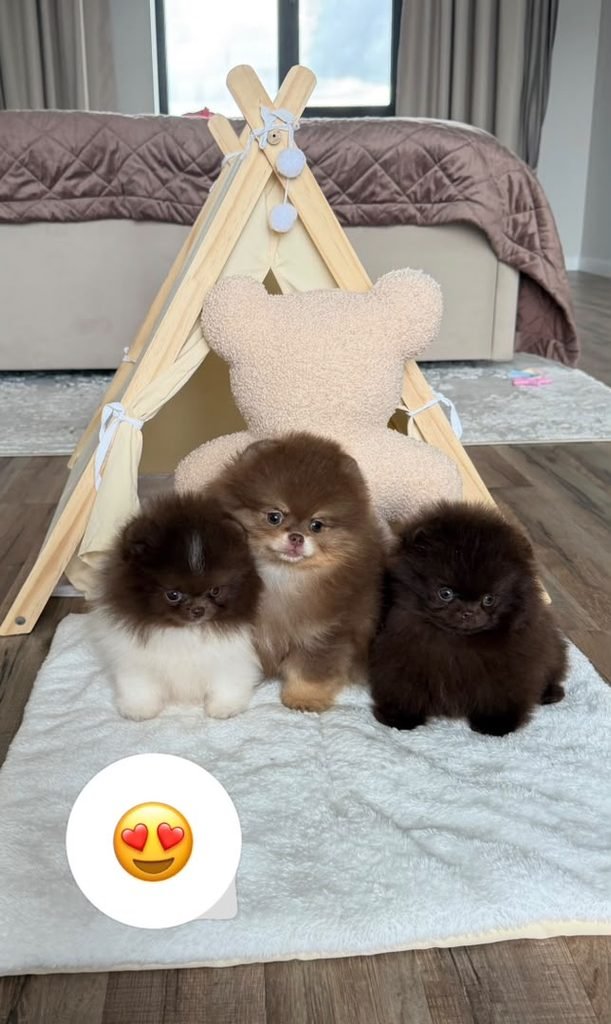
If you are researching Pomeranian puppy cost by color, you may notice that puppies with different coat colors can sometimes have very different asking prices. Color can influence buyer demand and breeder pricing, but it is only one part of the overall cost of a Pomeranian puppy.https://pomeranianblisspuppies.com/puppies/
The price of a Pomeranian can also be influenced by pedigree, breeder experience, health testing, lineage, location, age, registration, conformation potential, socialization, veterinary care, and overall breeding quality.
Understanding Pomeranian puppy cost by color can help prospective owners compare puppies more carefully and avoid assuming that an unusual coat automatically means a healthier or better dog.
The American Pomeranian Club recognizes numerous Pomeranian colors and patterns, including orange, cream, sable, black, brown, blue, parti, brindle, merle, tan points, and white.https://pomeranianblisspuppies.com/puppies/
What Determines Pomeranian Puppy Cost by Color?
When comparing Pomeranian puppy cost by color, it is important to understand that there is no universal price list that applies to every breeder.
Two puppies with exactly the same color may have completely different prices.
A breeder may consider:
- Pedigree
- Parent quality
- Health testing
- Bloodline
- Registration
- Conformation potential
- Coat quality
- Age
- Socialization
- Veterinary care
- Geographic location
- Breeder reputation
- Supply and demand
- Breeding goals
Therefore, coat color should be considered alongside the complete picture.
A higher price does not automatically mean a better puppy, and a lower price does not automatically mean a poor-quality puppy.https://pomeranianblisspuppies.com/puppies/
Does Pomeranian Color Affect Puppy Price?
Yes, color can affect the asking price in some markets, but it is not the only factor.
Certain colors or patterns may attract more attention from buyers. When demand for a particular appearance is high and relatively few puppies are available, some breeders may charge more.
However, buyers should be careful with claims that a color is automatically “rare,” “premium,” or “luxury.”
The American Pomeranian Club recognizes many colors and patterns and explains that Pomeranians come in a wide variety of colors.
This means that a color being less commonly seen in advertisements does not necessarily make the puppy healthier, more valuable genetically, or better suited to your family.https://pomeranianblisspuppies.com/puppies/
Pomeranian Puppy Cost by Color: Orange
Orange is one of the most recognizable Pomeranian colors and is currently among the most common colors according to the American Pomeranian Club.
Because orange Pomeranians are relatively familiar to buyers, pricing may be influenced more heavily by factors such as pedigree, breeder quality, health testing, and overall puppy quality rather than simply the color itself.
When considering an orange Pomeranian, ask about:
- Parents
- Health testing
- Pedigree
- Veterinary care
- Socialization
- Registration
- Contract
- Breeder support
Don’t assume that an orange puppy should automatically be inexpensive because the color is common.
Pomeranian Puppy Cost by Color: Orange Sable
Orange sable puppies can have coats that appear to change considerably as they mature.
Their coloration may include a mixture of orange and darker shading, creating a distinctive appearance.
Because buyers may find this look especially attractive, an orange sable puppy can sometimes command a different price from a solid-colored puppy.
However, the Pomeranian puppy cost by color should still be evaluated alongside health and breeding quality.
Ask the breeder how the puppy’s coat is expected to develop and whether they can show photographs of related adult dogs.
Pomeranian Puppy Cost by Color: Cream
Cream Pomeranians have a soft, pale appearance that can range from very light cream to warmer shades.
Cream can be particularly attractive to buyers looking for a lighter-colored Pomeranian.
However, color alone should not determine your purchase decision.
When comparing the Pomeranian puppy cost by color, remember that a cream puppy from health-tested parents and a carefully managed breeding program may reasonably have a different price from another cream puppy produced under very different circumstances.
Pomeranian Puppy Cost by Color: Black
Black Pomeranians have a striking solid appearance and can be highly appealing to buyers who prefer darker coats.
Black is an established Pomeranian color recognized by the American Pomeranian Club.
When looking at a black Pomeranian puppy, don’t focus exclusively on coat color.
Instead, investigate:
- Health history
- Parent health testing
- Temperament
- Pedigree
- Puppy development
- Breeder practices
A beautiful black coat is only one characteristic of the dog.
Pomeranian Puppy Cost by Color: Brown or Chocolate
Brown, sometimes commonly called chocolate, is another recognized Pomeranian color.
The American Pomeranian Club identifies brown among the breed’s recognized colors.
Some buyers may specifically search for brown Pomeranian puppies because of their distinctive appearance.
If you are comparing Pomeranian puppy cost by color, be sure to ask whether the breeder’s price reflects genuine breeding considerations or simply current buyer demand.
A breeder should be able to explain the pricing without relying solely on phrases such as “rare color.”
Pomeranian Puppy Cost by Color: Blue
Blue Pomeranians have a distinctive diluted dark appearance and can attract significant interest.
Blue is included among the recognized Pomeranian colors listed by the American Pomeranian Club.
Because certain coat colors can attract strong buyer interest, some breeders may price them differently.
However, don’t let the color distract you from the more important questions:
- Are the parents health tested?
- Can you see the health records?
- How are the puppies raised?
- What veterinary care has been provided?
- Is there a written contract?
- Does the breeder provide ongoing support?
These questions are more useful than simply asking whether the puppy is a “rare color.”
Pomeranian Puppy Cost by Color: Parti
Parti Pomeranians have a white base combined with another solid color or recognized pattern.
The American Pomeranian Club identifies parti as a recognized Pomeranian pattern.
Parti puppies can be visually distinctive, and some buyers may specifically seek particular markings.
As with other colors, however, Pomeranian puppy cost by color does not provide enough information to determine whether a puppy is a good purchase.
Look at the complete breeding program rather than the coat alone.
Pomeranian Puppy Cost by Color: Merle
Merle Pomeranians can have a particularly distinctive patterned coat.
The American Pomeranian Club lists merle among its recognized color or pattern classifications.
Because merle-patterned dogs can attract substantial attention online, buyers should be especially careful about breeder claims.
Ask the breeder:
- How are the parents related?
- What genetic testing has been performed?
- What health screening has been completed?
- What is the breeding program’s objective?
- Can you review the parents’ health information?
Coat appearance should never replace responsible health screening.
Pomeranian Puppy Cost by Color: White
White Pomeranians have a very light coat and can be highly attractive to prospective owners.
White is included among the colors recognized by the American Pomeranian Club.
If you are comparing the Pomeranian puppy cost by color, remember that white coloring by itself does not establish a puppy’s health, temperament, pedigree, or breeding quality.
A buyer should investigate the breeder and parents just as carefully as they would with any other Pomeranian.
Pomeranian Puppy Cost by Color: Sable
Sable Pomeranians can display multiple shades throughout the coat, producing a particularly interesting appearance.
The American Pomeranian Club includes sable and several sable classifications among recognized Pomeranian colors.
Because puppy coats can change as dogs mature, ask the breeder for information about how the puppy’s coat may develop.
If possible, look at photographs of the parents and older relatives.
This can give you a better understanding of the type of coat development that may occur.
Pomeranian Puppy Cost by Color: Beaver
Beaver is another recognized Pomeranian color.
Although it may be less familiar to casual buyers than orange or black, the American Pomeranian Club includes beaver among the breed’s recognized color or pattern categories.
A less familiar color can attract buyers looking for something different.
Nevertheless, don’t assume that less common automatically means more valuable.
The breeder’s health practices and the puppy’s overall quality remain important.
Pomeranian Puppy Cost by Color: Brindle
Brindle is a recognized Pomeranian pattern featuring darker striping over a base color.
The American Pomeranian Club includes brindle among its recognized classifications.
If a breeder advertises a brindle puppy as exceptionally rare or unusually valuable, ask what specifically supports the pricing.
A responsible breeder should be able to discuss the puppy’s background without making exaggerated claims.
Pomeranian Puppy Cost by Color: Tan Points
Tan-point Pomeranians have clearly defined tan markings in areas such as above the eyes, around the muzzle, chest, legs, feet, and underside of the tail.
The American Pomeranian Club recognizes tan points as an allowed pattern.
Because the markings can create a dramatic appearance, some buyers may actively seek this type of puppy.
As always, compare the entire breeding program rather than making your decision based solely on markings.
Why “Rare Color” Does Not Automatically Mean Better
One of the most important things to understand about Pomeranian puppy cost by color is that rarity and quality are not the same thing.
A puppy may have an unusual or less commonly advertised color while still requiring the same careful evaluation as any other puppy.
When a breeder uses terms such as:
- Rare
- Exotic
- Premium
- Luxury
- Exclusive
- Ultra rare
- Special color
ask what the price actually represents.
Is it based on documented pedigree?
Health-tested parents?
Show potential?
Breeding rights?
Demand?
Or simply appearance?
Understanding the difference can help you make a more informed purchase.
Health Should Come Before Color
When comparing Pomeranian puppy cost by color, health should remain one of your most important considerations.
The American Pomeranian Club recommends health screening that includes cardiac evaluation and patellar luxation evaluation, with additional recommended or elective testing such as hip, Legg-Calvé-Perthes, eye, and autoimmune thyroiditis evaluations depending on the program.
AKC also lists breed-specific health testing recommendations for Pomeranians.
Ask the breeder for documentation rather than relying on statements such as:
“All our puppies are healthy.”
“None of our dogs have problems.”
“Our puppies come from healthy parents.”
Those statements may sound reassuring, but documented testing gives you more useful information.
Pomeranian Puppy Cost by Color and Health Testing
Health testing can contribute to the overall cost of maintaining a responsible breeding program.
Breeders may invest in:
- Veterinary examinations
- Cardiac evaluations
- Patella evaluations
- Eye examinations
- DNA testing
- Reproductive veterinary care
- Pregnancy care
- Puppy examinations
- Vaccinations
- Parasite prevention
- Microchipping
- Nutrition
- Socialization
AKC explains that health testing is designed to help breeders make informed breeding decisions and reduce the prevalence of inherited disorders.
Therefore, when comparing Pomeranian puppy cost by color, don’t compare price without comparing what is included.
Pomeranian Puppy Cost by Color and Pedigree
Pedigree can influence the price of a Pomeranian.
A puppy from established lines may have documentation showing multiple generations of ancestry.
Depending on the breeder and puppy, buyers may also be paying for:
- Established bloodlines
- Show titles in the pedigree
- Breeding quality
- Conformation potential
- Documented parentage
- Health-tested ancestors
However, pedigree should be evaluated carefully.
Having papers does not automatically mean a breeder follows responsible breeding practices.
Ask to see the relevant documentation and learn about the parents.
Pomeranian Puppy Cost by Color and Breeder Experience
Breeder experience can also affect pricing.
A breeder who invests significant time in health testing, puppy care, socialization, veterinary attention, record keeping, and responsible placement may have higher costs than someone producing puppies with minimal investment.
AKC recommends looking for knowledgeable breeders who are transparent about their dogs, allow prospective owners to learn about the parents, maintain appropriate environments, and care about where puppies are placed.
This is why Pomeranian puppy cost by color should never be viewed as a simple color-based price chart.
How to Compare Two Pomeranian Puppies With Different Prices
Imagine you find two puppies.
Puppy A
- Attractive coat color
- Very low price
- Limited information about parents
- No clear health-testing documentation
- Minimal information about socialization
Puppy B
- Different coat color
- Higher price
- Documented parent health testing
- Veterinary records
- Written contract
- Detailed socialization information
- Breeder support
The difference in price deserves investigation.
Rather than asking only, “Which puppy is cheaper?” ask:
“What am I receiving for the price?”
This is a much more useful way to compare puppies.
Questions to Ask About Pomeranian Puppy Price
Before paying a deposit, ask:
- Why is this puppy priced at this amount?
- Does color affect the price?
- Are the parents health tested?
- Can I see the health-testing results?
- What veterinary care has the puppy received?
- Is the puppy registered?
- What does the contract include?
- Is there a health guarantee?
- What socialization has been provided?
- Does the price include a microchip?
- What vaccinations and deworming have been completed?
- Are there additional transportation costs?
- Does the breeder provide support after purchase?
The answers can help you understand what you are actually paying for.
How to Avoid Overpaying for a Pomeranian Puppy
If you are concerned about Pomeranian puppy cost by color, don’t let marketing language make the decision for you.
Research Multiple Breeders
Compare breeders based on practices, not just prices.
Ask for Documentation
Health claims should be supported by appropriate records.
Understand the Contract
Read every condition before paying a deposit.
Don’t Rush
A seller who pressures you to pay immediately deserves additional scrutiny.
Look Beyond Color
A beautiful coat is only one characteristic.
Consider Long-Term Costs
The purchase price is only the beginning.
The True Cost of Owning a Pomeranian
The initial puppy price is only part of your total investment.
After bringing your puppy home, you may have expenses for:
- Veterinary examinations
- Vaccinations
- Preventive care
- Food
- Grooming
- Toys
- Bedding
- Training
- Crate
- Collar and leash
- Identification
- Emergency veterinary care
- Pet insurance
- Boarding or pet sitting
This is why choosing a puppy based solely on Pomeranian puppy cost by color can be misleading.
The most affordable puppy initially may not necessarily be the least expensive dog to own over its lifetime.
Does a More Expensive Color Mean a Better Pomeranian?
No.
Price and quality are not interchangeable.
A higher price may reflect demand for a particular appearance, but it could also reflect breeding costs, pedigree, health testing, veterinary care, or other factors.
Likewise, a lower-priced puppy is not automatically unhealthy or poorly bred.
The important thing is to understand what the price represents.
What Makes a Responsible Pomeranian Breeder?
When evaluating Pomeranian puppy cost by color, evaluate the breeder as carefully as you evaluate the puppy.
Look for a breeder who is willing to:
- Discuss health testing
- Show appropriate records
- Explain the parents’ backgrounds
- Let you meet the mother when possible
- Explain how puppies are socialized
- Provide veterinary information
- Use a written contract
- Answer questions
- Ask questions about your home
- Provide reasonable after-sale support
AKC recommends visiting a breeder when possible, seeing at least one parent, observing the environment, and evaluating the condition and behavior of the dogs and puppies.
You can also review the American Pomeranian Club’s information on Pomeranian health testing when researching breeder claims.
Be Careful With “Teacup” Pomeranian Marketing
Another issue buyers may encounter when researching Pomeranian puppy cost by color is marketing that combines unusual colors with terms such as “teacup,” “micro,” or “tiny.”
AKC notes that “teacup” is not an official size designation for AKC-recognized breeds and cautions buyers about breeders marketing dogs around extreme size claims.
If a seller combines “rare color,” “teacup,” and an unusually high price, ask additional questions about the breeding practices and the puppy’s expected adult size.
Don’t allow marketing terminology to replace documented information.
Pomeranian Puppy Cost by Color: What Buyers Should Remember
The biggest lesson from Pomeranian puppy cost by color is that color is only one factor.
A puppy’s overall value should be considered in the context of:
- Health
- Genetics
- Pedigree
- Temperament
- Breeder practices
- Veterinary care
- Socialization
- Documentation
- Contract
- Long-term breeder support
The American Pomeranian Club recognizes a broad range of colors and patterns, meaning buyers have many legitimate color choices without needing to treat one particular appearance as automatically superior.
Pomeranian Puppy Color Comparison
| Color or Pattern | Buyer Interest | What to Investigate |
|---|---|---|
| Orange | Commonly sought | Pedigree, health, temperament |
| Orange Sable | Popular appearance | Coat development, parents |
| Cream | High visual appeal | Health testing and lineage |
| Black | Distinctive | Parent health and pedigree |
| Brown | Less commonly seen | Breeder claims and documentation |
| Blue | Distinctive | Health, genetics, breeding practices |
| Parti | Patterned appearance | Parent background and health |
| Merle | Eye-catching | Genetic background and health testing |
| White | Very light coat | Health and breeder practices |
| Sable | Variable appearance | Adult coat development |
| Beaver | Less familiar | Documentation and breeder quality |
| Brindle | Distinctive pattern | Breeding goals and health |
| Tan Points | Strong contrast | Markings and overall quality |
These are recognized color or pattern categories described by the American Pomeranian Club.
Final Thoughts on Pomeranian Puppy Cost by Color
Understanding Pomeranian puppy cost by color can help you make a smarter decision when comparing available puppies.
Color can influence buyer demand and breeder pricing, but it should never be the only factor you consider.
Before purchasing, investigate the breeder, meet the parents when possible, review health-testing documentation, understand the puppy’s veterinary care, ask about socialization, and carefully read the purchase contract.
Remember that the American Pomeranian Club recognizes a wide variety of colors and patterns.
A responsible breeder should be able to explain what goes into the price of a puppy rather than relying exclusively on phrases such as “rare” or “premium color.”
Most importantly, choose based on the complete puppy and breeding program—not simply the coat color.
The right Pomeranian should be a good fit for your household, and the breeder should be someone who prioritizes the health, temperament, and welfare of the dogs they produce.
Frequently Asked Questions
Does Pomeranian puppy color affect the price?
It can. Buyer demand and availability may influence pricing for particular colors or patterns, but breeder quality, health testing, pedigree, veterinary care, and other factors can also have a major impact.
What is the most expensive Pomeranian color?
There is no universal most expensive Pomeranian color. Prices vary between breeders and markets, and color alone does not establish a puppy’s quality.
Are rare-color Pomeranians healthier?
Color rarity does not automatically indicate better health. Buyers should investigate the parents, health testing, breeding practices, and veterinary records.
What colors are recognized in Pomeranians?
The American Pomeranian Club lists colors and patterns including orange, cream, sable, black, brown, blue, beaver, brindle, merle, parti, tan points, and white.
Should I pay more for a rare Pomeranian color?
Before paying a premium, ask why the puppy costs more and what is included in the price. Don’t assume that a rare-looking coat automatically represents better breeding quality.
What health tests should Pomeranian parents have?
The American Pomeranian Club recommends health screening that includes cardiac and patellar evaluations, with additional testing recommendations including eye, hip, Legg-Calvé-Perthes, and autoimmune thyroiditis evaluations.
Can Pomeranian puppies change color as they grow?
Yes. Some Pomeranian puppies can experience noticeable coat changes as they mature. Ask the breeder about the parents and previous puppies from the same lines to better understand potential coat development.
What should I ask a Pomeranian breeder before buying?
Ask about parent health testing, pedigree, temperament, veterinary care, socialization, registration, the contract, health guarantees, and what support is provided after the puppy goes home.
Is a more expensive Pomeranian automatically better?
No. Price alone cannot establish health, temperament, breeding quality, or suitability for your household.
What matters more than Pomeranian coat color?
Health, temperament, responsible breeding practices, socialization, veterinary care, pedigree, and compatibility with your lifestyle should all be considered alongside appearance.https://pomeranianblisspuppies.com/puppies/