September 4, 2026
A Guide to Coat Patterns & Markings
Blue Merle Pomeranian Colors: Coat Patterns, Shades, and Markings
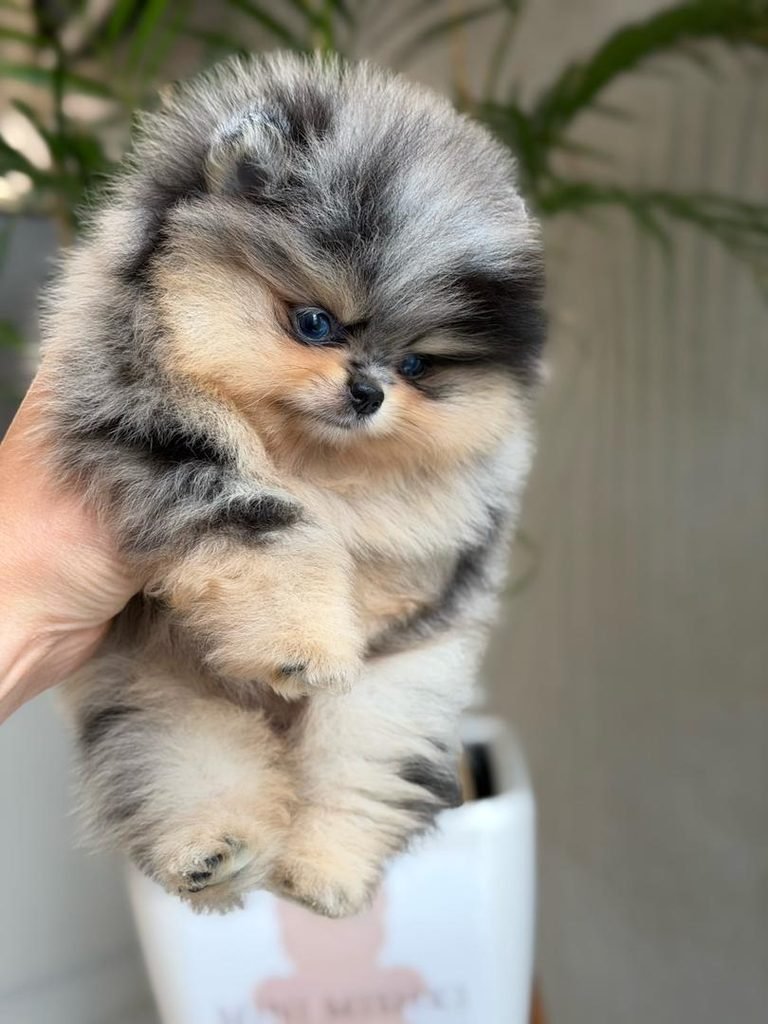
Blue Merle Pomeranian Colors are among the more distinctive coat patterns found in Pomeranians. The combination of diluted dark pigmentation, lighter areas, and irregular patches can give each puppy a unique appearance.https://pomeranianblisspuppies.com/puppies/jasper/
If you are researching Blue Merle Pomeranian Colors before choosing a puppy, it is helpful to understand what “blue merle” actually means. The term describes a genetic coat pattern rather than a single solid color. The resulting appearance can vary considerably from one dog to another.
While coat color can be an important part of choosing a companion, prospective owners should also consider health, temperament, socialization, and responsible breeding.https://pomeranianblisspuppies.com/puppies/jasper/
What Are Blue Merle Pomeranian Colors?
Blue Merle Pomeranian Colors generally refer to a merle pattern involving diluted black pigmentation.
Instead of appearing completely black, the darker pigment can appear gray, slate, or blue-gray. Irregular patches of darker pigment are distributed across a lighter base, creating the characteristic merle effect.
A blue merle Pomeranian may therefore display combinations of:
- Gray
- Slate
- Blue-gray
- Black-gray
- Cream
- White
- Tan or other markings
The exact combination depends on the puppy’s genetics.https://pomeranianblisspuppies.com/puppies/jasper/
Understanding the Word “Blue”
The word “blue” can be confusing for people who are unfamiliar with dog coat terminology.
A blue Pomeranian is not typically bright blue. In canine color terminology, “blue” commonly refers to a dilution of black pigment.
This can produce a soft gray or steel-gray appearance.
When combined with merle, the diluted pigment creates a mottled pattern that can look quite different depending on lighting, coat density, and the individual dog’s genetics.
What Does a Blue Merle Pomeranian Look Like?
The appearance of Blue Merle Pomeranian Colors can differ substantially between individual puppies.
One puppy may have a predominantly gray coat with darker patches, while another may show more extensive white or cream areas.
Common visual characteristics can include:
- Mottled body markings
- Irregular gray patches
- Darker facial areas
- Light-colored sections
- White markings
- Different shades of gray
- A fluffy double coat
Because Pomeranians have abundant fur, the merle pattern may appear somewhat different as the puppy grows.
Blue Merle vs. Solid Blue Pomeranian
A solid blue coat and a blue merle pattern are not the same thing.
A solid blue Pomeranian would have diluted dark pigmentation throughout the coat without the irregular merle pattern.
Blue merle, on the other hand, contains areas of lighter and darker pigmentation.
The distinction is important when researching Blue Merle Pomeranian Colors, particularly if you are comparing photographs of different puppies.
Blue Merle and White
Some blue merle Pomeranians can have noticeable white markings.
White may appear on areas such as:
- Chest
- Feet
- Face
- Tail
- Neck
The amount of white varies between individual dogs.
White markings should not be confused with the merle pattern itself. They are separate aspects of the dog’s overall coat appearance.
Blue Merle and Cream
Cream-colored areas can sometimes be seen alongside merle patterning depending on the dog’s broader genetic makeup.
This can create a softer overall appearance compared with a puppy whose coat contains mostly gray and dark pigmentation.
When looking at Blue Merle Pomeranian Colors, remember that photographs can make shades appear different depending on lighting and camera settings.
Blue Merle and Tan Markings
Some dogs may display tan or warm-colored markings in addition to the merle pattern.
These markings can add another layer of contrast to the coat.
The final appearance depends on the combination of genes inherited from the puppy’s parents.
How Merle Changes the Coat
Merle is a pattern that causes patches of diluted pigmentation within areas of normally pigmented fur.
Instead of one uniform shade, the coat can have a marbled or irregular appearance.
This is why no two Blue Merle Pomeranian Colors necessarily look identical.
The distribution of lighter and darker areas can differ from one dog to another.
Blue Merle Pomeranian Genetics
Understanding the genetics behind the coat is important when discussing Blue Merle Pomeranian Colors.
Merle is associated with a variant in the PMEL gene. The pattern can affect areas of eumelanin pigmentation, creating the characteristic patches and dilution.
Because merle is inherited genetically, breeders should understand the genetics of the parent dogs before planning a litter.
The UC Davis Veterinary Genetics Laboratory provides canine genetic testing resources and information that can help explain inherited coat traits.
Why Merle Breeding Requires Care
Merle breeding should be approached responsibly.
Breeding two merle dogs together can result in puppies inheriting two copies of the merle variant. Dogs with two copies can have an increased risk of hearing and vision abnormalities.
For this reason, prospective buyers should ask breeders about the genetic background of both parents.
When researching Blue Merle Pomeranian Colors, don’t hesitate to ask how the breeder manages merle genetics.
Can Coat Color Predict Personality?
No.
The appearance of Blue Merle Pomeranian Colors does not tell you whether a puppy will be friendly, shy, energetic, independent, or affectionate.
Temperament is influenced by genetics, early development, socialization, training, and environment.
Choose a puppy based on its overall suitability for your household rather than assuming a particular coat pattern guarantees a specific personality.
Blue Merle Pomeranian Puppy Coat Changes
Puppy coats can change as dogs mature.
The color and appearance you see in a young Blue Merle Pomeranian Puppy may not look exactly the same once the adult coat develops.
Possible changes can involve:
- Coat texture
- Shade intensity
- Distribution of visible markings
- Overall coat fullness
This is one reason breeders should provide photographs and information about the puppy’s parents and previous development when available.
Do Blue Merle Pomeranians Stay the Same Color?
Not necessarily.
Pomeranian coats can change as puppies mature. Some colors may become lighter or appear different as the puppy coat transitions into an adult coat.
Environmental factors such as lighting can also make photographs appear different.
If you are evaluating Blue Merle Pomeranian Colors, ask the breeder for recent photographs taken in natural lighting.
How Lighting Affects Blue Merle Colors
Photographs can be misleading.
Indoor lighting, sunlight, camera settings, and image editing can all influence how a coat appears.
A gray coat may look more blue in one photograph and more silver in another.
For an accurate assessment, ask to see:
- Recent photographs
- Natural-light photographs
- Videos
- Photographs of the parents
- Multiple views of the puppy
Blue Merle Pomeranian Coat Texture
The Pomeranian’s double coat adds another dimension to the appearance of its colors.
As the coat becomes fuller, some markings may become more or less visually prominent.
Regular grooming also helps reveal the underlying pattern.
The American Kennel Club provides additional information about the Pomeranian’s coat and general breed characteristics.
Grooming a Blue Merle Pomeranian
Regardless of coat pattern, Pomeranians require regular grooming.
A grooming routine can include:
- Regular brushing
- Occasional bathing
- Nail trimming
- Ear care
- Dental care
- Coat inspection
Brushing helps reduce tangles and mats while keeping the coat looking clean and healthy.
A professional groomer familiar with double-coated breeds can also help maintain the coat properly.
Choosing a Blue Merle Pomeranian Puppy
If you are specifically interested in Blue Merle Pomeranian Colors, don’t let coat appearance become the only factor in your decision.
Consider:
Health
Ask for veterinary records and information about the parents.
Temperament
Observe how the puppy responds to people and its environment.
Socialization
Ask what experiences the puppy has had before going to its new home.
Genetics
Discuss merle inheritance and the parents’ genetic background.
Breeder Practices
Research how the puppies are raised and cared for.
A healthy and well-socialized puppy should always be the priority.
Questions to Ask a Breeder
Before purchasing a puppy based on Blue Merle Pomeranian Colors, ask:
- What are the parents’ coat colors?
- What are the parents’ merle genetics?
- Have the parents undergone appropriate health testing?
- Can I see the mother?
- What veterinary care has the puppy received?
- What vaccinations have been administered?
- Has the puppy been dewormed?
- How has the puppy been socialized?
- What color changes might I expect as the puppy matures?
- Can I see recent photographs or videos?
- What health guarantee is provided?
- What records will accompany the puppy?
A responsible breeder should be comfortable providing clear information.
Blue Merle Pomeranian Colors and Health
Color should never be used as a substitute for health evaluation.
When considering Blue Merle Pomeranian Colors, pay attention to the puppy’s overall condition.
Look for:
- Bright, alert eyes
- Clean ears
- Clean coat
- Healthy body condition
- Normal movement
- Appropriate energy
- Comfortable interaction with people
A veterinarian should perform an appropriate examination as part of responsible puppy care.
Blue Merle Pomeranian Puppies for Sale
If you are searching online for Blue Merle Pomeranian Puppies for Sale, take time to investigate the seller.
Look beyond photographs and advertised prices.
Check whether the breeder provides:
- Health documentation
- Puppy records
- Parent information
- Clear contact details
- A written agreement
- Health guarantees
- Transparent transportation arrangements
Be cautious when a seller refuses reasonable questions or pressures you to make an immediate payment.
Beware of Misleading Color Claims
Because unusual colors can attract buyers, some sellers may use confusing or inaccurate terminology.
A puppy described as “blue merle” should have a coat pattern consistent with the term rather than simply being gray.
If you are uncertain, ask the breeder to explain the puppy’s genetic color and pattern.
Independent genetic testing can also provide useful information in appropriate circumstances.
Blue Merle Pomeranian Puppy Price
The price of a puppy can vary significantly.
Factors may include:
- Breeder reputation
- Location
- Pedigree
- Health testing
- Veterinary care
- Registration
- Socialization
- Demand
- Coat characteristics
An unusual color should not automatically justify an extremely high price.
Responsible breeding and proper health care are more important than rarity alone.https://pomeranianblisspuppies.com/puppies/jasper/
Preparing for Your New Pomeranian
Once you’ve selected your puppy, prepare your home before arrival.
Important supplies include:
- Puppy food
- Food and water bowls
- Comfortable bed
- Crate or secure sleeping area
- Harness
- Leash
- Identification tag
- Toys
- Grooming brush
- Nail trimmers
- Training treats
- Cleaning supplies
Puppy-proof your home by securing electrical cords, chemicals, medications, small objects, and other potential hazards.https://pomeranianblisspuppies.com/puppies/jasper/
Blue Merle Pomeranian Grooming Routine
A consistent grooming routine can help keep the coat attractive and comfortable.
Brush regularly to reduce tangles and remove loose hair.
Introduce grooming slowly so your puppy learns to tolerate:
- Brushing
- Paw handling
- Nail trimming
- Ear checks
- Teeth cleaning
- Bathing
Positive experiences during puppyhood can make grooming easier throughout adulthood.https://pomeranianblisspuppies.com/puppies/jasper/
Frequently Asked Questions
What are Blue Merle Pomeranian Colors?
Blue merle generally describes a merle pattern involving diluted black pigmentation, often producing gray or slate-colored areas mixed with lighter and darker patches.
Is blue merle actually blue?
Usually, no. In dog coat terminology, “blue” commonly refers to diluted black pigment, which can appear gray, slate, or blue-gray.
Can Blue Merle Pomeranians have white markings?
Yes, individual dogs can have varying amounts of white alongside their merle pattern.
Can Blue Merle Pomeranian Colors change?
The appearance can change as the puppy coat develops into an adult coat. Lighting and grooming can also influence how the color appears.
Does merle affect temperament?
The merle pattern itself should not be used to predict temperament. A puppy’s personality is influenced by genetics, development, socialization, and environment.
Is merle breeding safe?
Merle breeding requires careful genetic planning. Breeding two merle dogs can produce puppies with two copies of the merle variant, which is associated with increased risks of hearing and vision abnormalities.
How do I verify a puppy’s color?
Ask for recent natural-light photographs, videos, information about the parents, and details about the puppy’s genetic background.
Should color be the main factor when choosing a puppy?
No. Health, temperament, responsible breeding, socialization, and suitability for your household should be more important than coat color.
Final Thoughts
Blue Merle Pomeranian Colors can create an eye-catching and distinctive appearance, with combinations of gray, slate, lighter areas, darker patches, and potentially white or other markings.
Because the merle pattern is genetically inherited, responsible breeding practices are particularly important. Anyone interested in a blue merle puppy should ask questions about the parents’ genetics and health rather than focusing only on appearance.
Whether you are researching Blue Merle Pomeranian Colors for a future purchase or simply want to understand this unusual coat pattern, remember that every puppy is an individual.
The most important qualities are health, sound temperament, proper socialization, responsible breeding, and a loving environment.
A beautiful coat can make a Pomeranian stand out, but responsible care is what helps turn a beautiful puppy into a happy lifelong companion.https://pomeranianblisspuppies.com/puppies/jasper/